
About Brain Cancer
What is Brain Cancer
Brain cancer happens when cells in the brain grow in an abnormal and uncontrolled way, forming a mass called a tumour. Unlike many other cancers, brain tumours can cause problems even when they are small, because the brain is a tightly packed and highly sensitive organ. Tumours can press on surrounding brain tissue, block the flow of fluid, or disrupt normal communication between different parts of the brain.
Location of the tumour can significantly impact the types of symptoms that may present. Because the brain controls movement, speech, memory, and many other functions, a tumour can cause a wide range of symptoms depending on where it forms and how fast it grows.
Brain tumours can develop at any age, and their behaviour differs widely depending on the type of cells involved. Symptoms can appear gradually or suddenly, and they may mimic other conditions, which sometimes delays diagnosis.
Brain cancer carries a significant burden because it can affect critical brain functions and progress quickly in some cases. Survival rates vary widely depending on tumour type, grade, and patient age, but overall brain cancer is one of the more challenging cancers to treat.
Beyond survival, tumours and treatment can affect quality of life, including thinking, memory, physical abilities, and emotional wellbeing. This is why early detection, accurate diagnosis, and access to specialist care are essential for improving outcomes and supporting patients and their families through treatment and recovery.
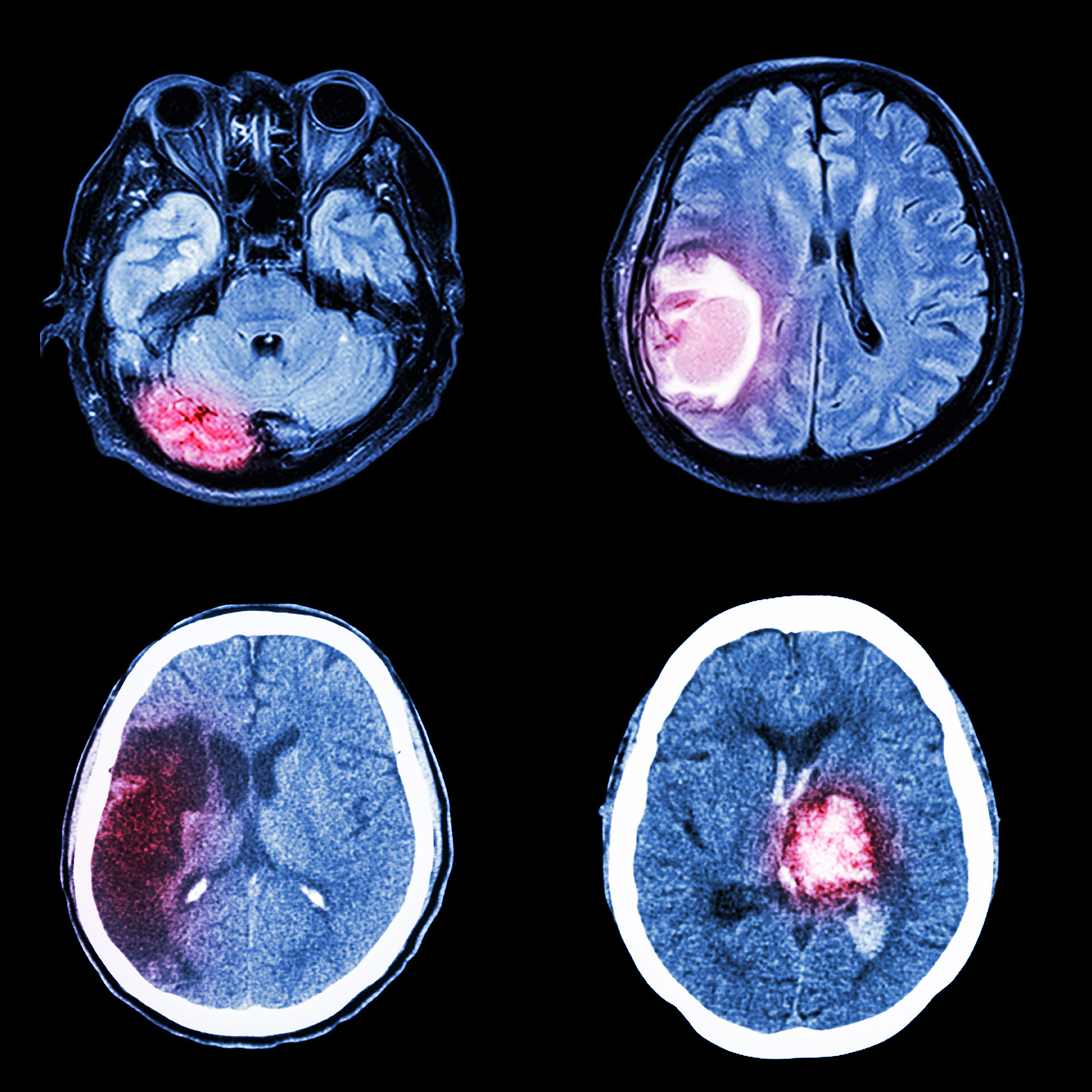
Types of brain tumours
There are several ways to categorise and describe brain tumours. Doctors may talk about their type, grade, location, and specific markers. These details help guide treatment decisions and predict how the tumour might behave.
Malignant or Benign
Malignant Tumours
grow quickly and can invade nearby brain tissue. They may return after treatment. Malignant brain tumours can also be referred to as brain cancer.
Benign Tumours
grow more slowly and are less likely to spread, but they can still cause serious problems and may require treatment or monitoring depending on their size or location.
Primary and secondary tumours
Primary brain tumours
start in the brain or spinal cord itself. They can be benign or malignant.
Secondary (metastatic) brain tumours
start as cancer elsewhere in the body and spread to the brain. These are always malignant, and are more common than primary brain tumours in adults.
Brain tumour types
Brain tumours are named after the type of cell or tissue they start in. While the World Health Organisation classifies over 100 brain tumour types the most common types are:
Gliomas
start in glial cells, which support nerve cells. They include astrocytomas, oligodendrogliomas, and glioblastomas.
Meningiomas
form in the membranes covering the brain and spinal cord. Most are benign but can still cause pressure or symptoms depending on location.
Pituitary tumours
start in the pituitary gland and can affect hormones and growth.
Medulloblastomas
fast-growing tumours more common in children.
Ependymomas
start in the lining of the brain’s fluid-filled spaces (ventricles).
Understanding the specific tumour type helps doctors plan treatment and give more accurate information about likely outcomes.
Genetic and molecular features
In recent years, doctors have learned that changes in certain genes, called genetic mutations or molecular markers, can help explain why a tumour behaves the way it does. These genetic changes do not usually come from parents or get passed on. Instead, they develop in the tumour cells themselves.
Testing for these mutations helps doctors:
- confirm the exact tumour type
- predict how aggressive it may be
- decide which treatments are most likely to work
For example, markers you may hear about, particularly in treatment planning and prognosis for gliomas, include IDH mutation, 1p/19q co-deletion and MGMT methylation.
Molecular testing is now a standard part of diagnosis for most brain tumours in Australia. Ask your doctor or care team if your tumour has been tested for genetic and molecular markers and what the results mean for your care.
How tumours are graded
Brain tumours are graded, not staged like most other cancers. Grading describes how abnormal the tumour cells look under a microscope and how likely they are to grow and spread.
Grade 1
Slow-growing, benign, cells look most like normal brain cells
Grade 2
Slower-growing but may come back or change over time
Grade 3
Faster-growing and more likely to recur
Grade 4
Very fast-growing and aggressive, more likely to spread
Lower grade tumours can develop into a higher grade tumour over time.
Grade and molecular features are often combined to give a clearer picture of how the tumour might behave and which treatments are best.
More information
- Understanding Brain Tumours – Cancer Council Australia https://www.cancer.org.au/assets/pdf/understanding-brain-tumour-booklet
- Types of brain cancers – Cure Brain Cancer Foundation https://www.curebraincancer.org.au/about-brain-cancer/types-of-brain-cancer
- Types of tumours – FS6to9 – Various types of tumours
- Meningioma – FS10to11 – Various types of tumors Cont
- Central Nervous System Tumours – World Health Organization https://publications.iarc.who.int/Book-And-Report-Series/Who-Classification-Of-Tumours/Central-Nervous-System-Tumours-2021
Understanding your diagnosis
A brain tumour diagnosis brings together several key details that help your doctors plan treatment and explain what to expect. Each person’s diagnosis is unique, based on the tumour’s type, grade, location, and molecular features. These factors, along with your age and overall health, shape treatment options and likely outcomes.
As well as the type of tumour, grade and molecular markers outlined in the previous section, your doctor may also consider
- Size of the tumour and whether it has spread within the brain or spinal cord
- Location in the brain, including the function of the area of brain where your tumour is found, and proximity to arteries
- Pressure effects, such as swelling or fluid build-up
- Overall health and other medical conditions that could affect treatment options
It’s common to feel overwhelmed at first. Ask your doctor or nurse to explain your pathology report, test results, and next steps in plain language. You can also bring a family member or support person to appointments to help take notes or ask questions.
More information
- It’s OK to Ask Booklet – A guide for patients & families with helpful questions for doctor (internal link)
Paediatric brain tumours
While some tumour types occur in both adults and children, many paediatric brain tumours are biologically different and behave differently. Children’s brains are still developing, so the types of tumours, how they respond to treatment, and the potential long-term effects are not the same as in adults. Treatment is planned carefully to balance controlling the cancer with protecting brain development, thinking, learning, and growth.
Common paediatric brain tumour types
Medulloblastoma
the most common malignant brain tumour in children, usually forming in the cerebellum. It can spread through the brain and spinal cord.
Low-grade gliomas
slower-growing tumours that often respond well to surgery and, in some cases, chemotherapy.
Ependymoma
develops in the lining of the brain’s fluid spaces (ventricles). It can sometimes block fluid flow, causing pressure in the brain.
High-grade gliomas
faster-growing and more difficult to treat.
Craniopharyngioma
a benign tumour near the pituitary gland that can affect hormones and vision.
Treatment
Treatment for children may include surgery, radiotherapy, chemotherapy, or a combination. Radiation is used cautiously in younger children because of its impact on brain development. Long-term follow-up is often needed to monitor growth, learning, hearing, vision, and hormonal function.
Survivorship and long-term effects
Even after successful treatment, children who have had brain cancer may experience long-term effects. These can include learning or memory difficulties, changes in attention or behaviour, hormonal problems, hearing or vision issues, and fatigue.
Regular follow-up with a multidisciplinary team helps identify and manage these challenges early. Rehabilitation, educational support, and psychological care are often important parts of ongoing care, helping children reach their full potential as they adjust to life after treatment.
Family and psychosocial support
A diagnosis of brain cancer in a child affects the whole family. Parents, siblings, and caregivers often need emotional, practical, and financial support. Specialist children’s hospitals have multidisciplinary teams that include social workers, psychologists, and teachers to help children and families through treatment and recovery.